Hotkeys and the Order You Send by Accident
Posted

Hotkeys exist because clicking is slow and a boundary break does not wait. They work. The speed is real and on a fast move it is the difference between the intended price and a considerably worse one. What is less often discussed is that the same property which makes them fast, the absence of any intermediate step, also removes every opportunity to notice that the wrong thing is about to happen.
The Pause You Deleted Was Doing Something
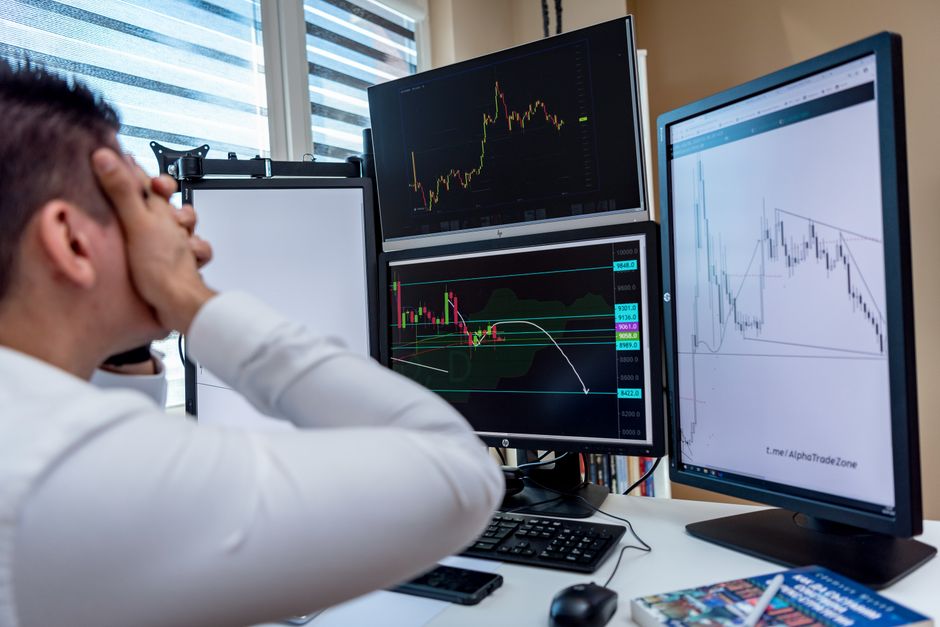
Sending an order through a form involves reading the quantity, seeing the side, and confirming. That sequence is slow and it is also a series of checkpoints. Each one is a moment where a wrong number or a wrong direction can register before it becomes real.
A hotkey compresses all of that into a single physical action with no feedback until the order is already working. The trade off is deliberate and usually correct for this kind of entry. It just needs to be recognised as a trade off, because the natural reaction after a mis-sent order is to blame concentration, when the actual cause is a layout that permitted the slip.
Adjacency Is the Main Risk

Most accidental orders are not caused by pressing something unrelated. They are caused by pressing the key next to the intended one. This makes the physical arrangement of the bindings more important than the bindings themselves.
The principle is that neighbouring keys should have similar consequences, and dissimilar consequences should be physically far apart. Buy and sell adjacent to each other is the obvious mistake and a common one. Flatten the position next to double the position is worse. Anything that reverses direction deserves to be somewhere your hand does not rest.
Quantity Deserves Separate Treatment
A binding that sends an order at whatever quantity happens to be loaded is a quiet hazard, because the quantity was set at some earlier point and may not be what you assume. Sizing that carries over from a previous trade, or from testing, or from a different instrument entirely, produces an order that is correct in every respect except the one that matters.
Either the size should be explicit in the binding itself, so that a given key always sends a known quantity, or the current quantity should be displayed somewhere prominent enough that you cannot press the key without having seen it. Relying on remembering what it was set to is the arrangement that eventually fails.
Separate the Destructive Keys
Some actions can be undone at modest cost. An unwanted entry can be closed, usually for a small loss. Other actions cannot. Cancelling every working order, including a protective stop, leaves a position exposed with nothing beneath it, and the trader may not realise the stop is gone until price has already moved.
Bindings of that kind belong in a different region of the keyboard, ideally requiring a modifier, and ideally not in the group your fingers reach for during normal operation. The inconvenience is the point. An action whose consequences cannot be reversed should cost slightly more effort than one that can.
Test Them Where It Cannot Cost Anything
Every binding should be exercised in a simulated environment before it is used live, and not just once. Press each key deliberately, confirm exactly what it produced, and then press the keys around it to see what a slip would have done. That second half is the part people skip and it is the part that finds the dangerous adjacencies.
The same exercise should be repeated after any change to the layout, after a platform update, and after any period away from the desk. A binding you configured months ago and have not used since is a binding you remember approximately, and approximately is not good enough for an action that completes the instant your finger lands. Muscle memory is what makes hotkeys valuable and it is also what sends the order you did not mean to send, from a layout that changed while your hands did not.